Vibe Commerce: How to Build a Brand That Customers Feel Connected To
Quick question:
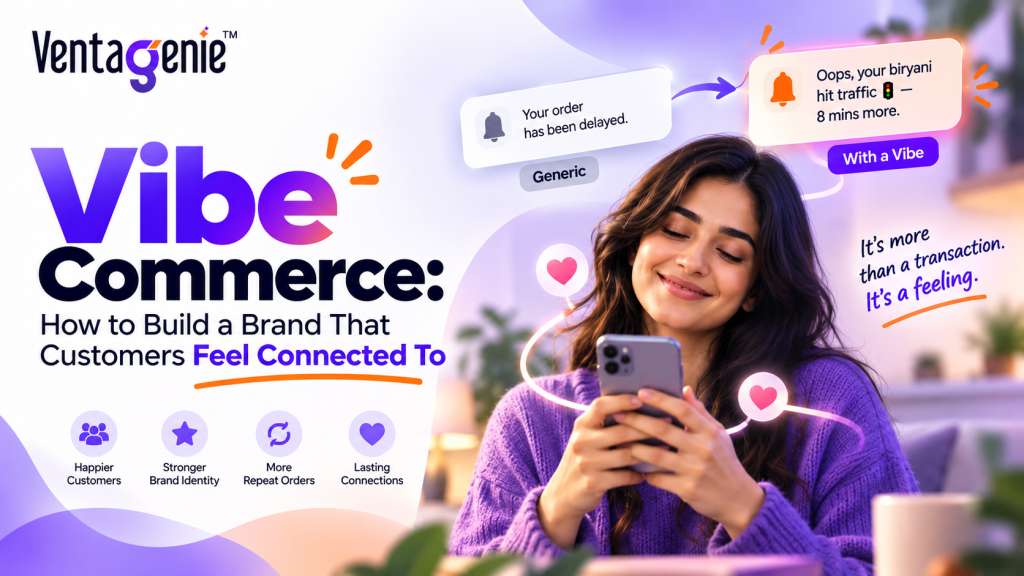
Think of your favorite delivery app. Now think of the one you use because it’s just… there. Same city, same speed, same prices maybe. But one feels different. That feeling has a name now, and marketers everywhere are starting to talk about it: vibe commerce.
Most people haven’t heard the term yet. That’s exactly why this is worth understanding early — before every competitor is using it too.
What Is Vibe Commerce?
Here’s the simplest way to explain it:
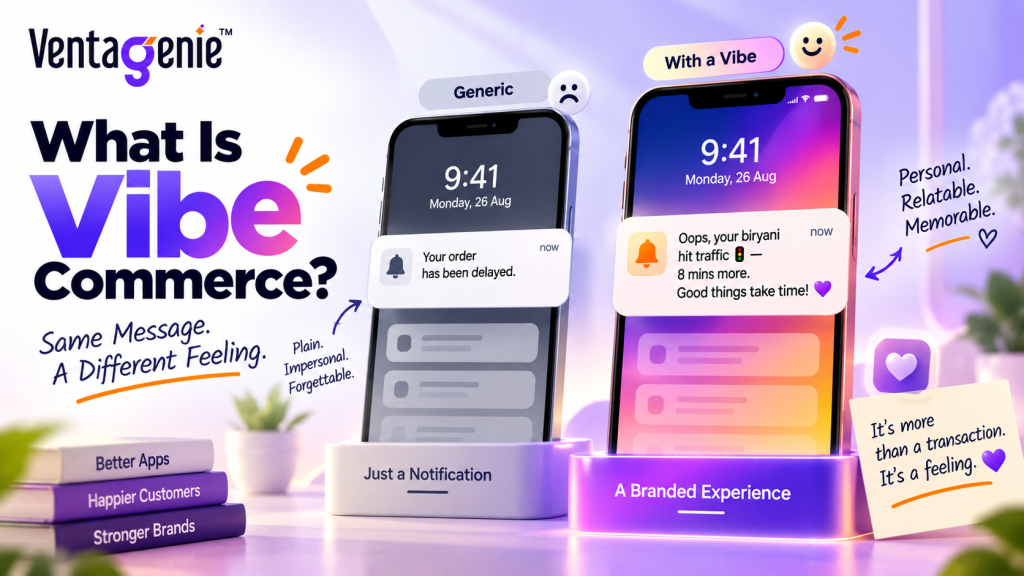
Vibe commerce means designing your whole customer experience — your app, your notifications, your packaging, even how you say sorry for a late order — so it gives people one clear, consistent feeling.
That’s it. No jargon needed.
Right now, your delivery app probably does everything “correctly.” Orders go through. Riders show up. Refunds get processed. But being correct isn’t the same as being memorable. Vibe commerce is what happens when a brand stops asking “does this work?” and starts asking “how does this make someone feel?“
A simple test: if you covered your app’s logo, would a customer still know it’s yours — just from how it talks to them? If not, you don’t have a vibe yet. You have a working app. Those are two very different things.
Why Everyone's Suddenly Talking About This
For years, delivery apps competed on three things: speed, price, and selection. In 2026, all three have flattened out.
1.Everyone delivers fast now. 10-minute delivery isn’t special anymore — it’s expected.
2.Discounts are matched within days by competitors.
3.Most apps in the same city pull from similar stock and similar riders.
When two apps have similar products, similar prices, similar delivery times, and similar payment options, why would a customer pick one over the other? Sometimes the honest answer is just: “I like using this one more.” That feeling is hard to put a number on — but it’s exactly what decides whether someone comes back next time.
The Brand Is No Longer Just the Logo
For a long time, “brand” meant a logo, a colour palette, a tagline, an ad campaign. But customers don’t experience a delivery app that way. They search, order, get notified, track a delivery, contact support, ask for a refund. Every one of those moments shapes how they see the brand — which means your brand isn’t only what your marketing team makes anymore. Your product team makes it. Your tech stack makes it. Your delivery experience makes it.
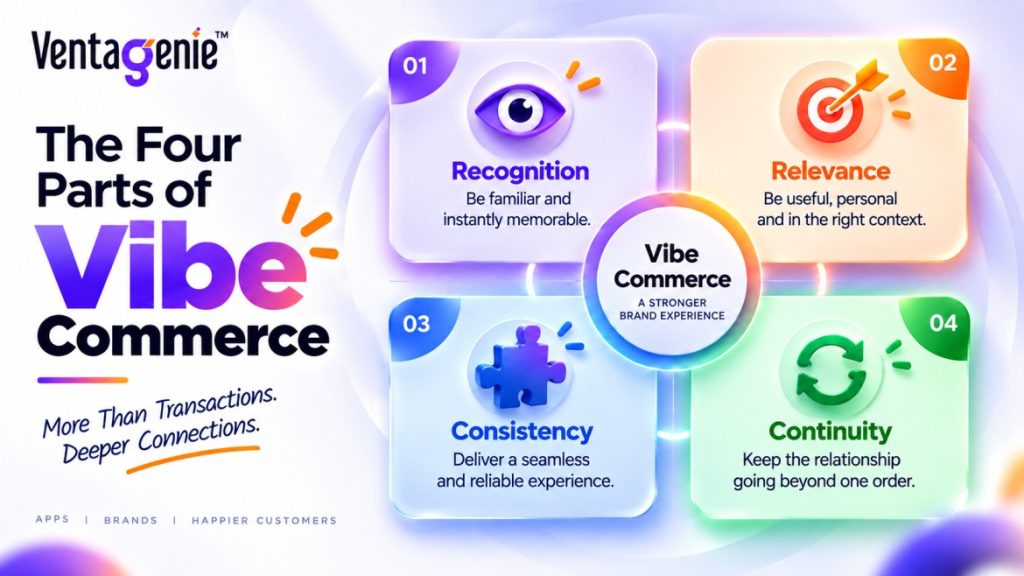
The Four Parts of Vibe Commerce
A useful way to break this down into something you can actually act on:
1. Recognition
Could someone tell it’s your app with the logo covered? This comes from the language you use, the style of your notifications, your illustrations, your interaction patterns — not just your visual design.
2. Relevance
Does the app understand what the customer actually needs right now? Someone opening a food app is often just hungry, not sure what they want. Someone reordering groceries wants their usual list back fast. Good personalization isn’t about showing off how much data you have — it’s about making the next action easier.
3. Consistency
Does the brand feel the same everywhere? If your Instagram is fun and modern but your refund emails read like a legal notice, customers notice the mismatch even if they can’t explain it. Every channel doesn’t need identical wording, but it all needs to feel like the same company.
4. Continuity
Does the journey feel like one smooth experience, or does it feel like five different teams built five different products? Discover → search → order → pay → track → receive → reorder is one journey to the customer, even if marketing, product, delivery, and support each own a piece of it internally.
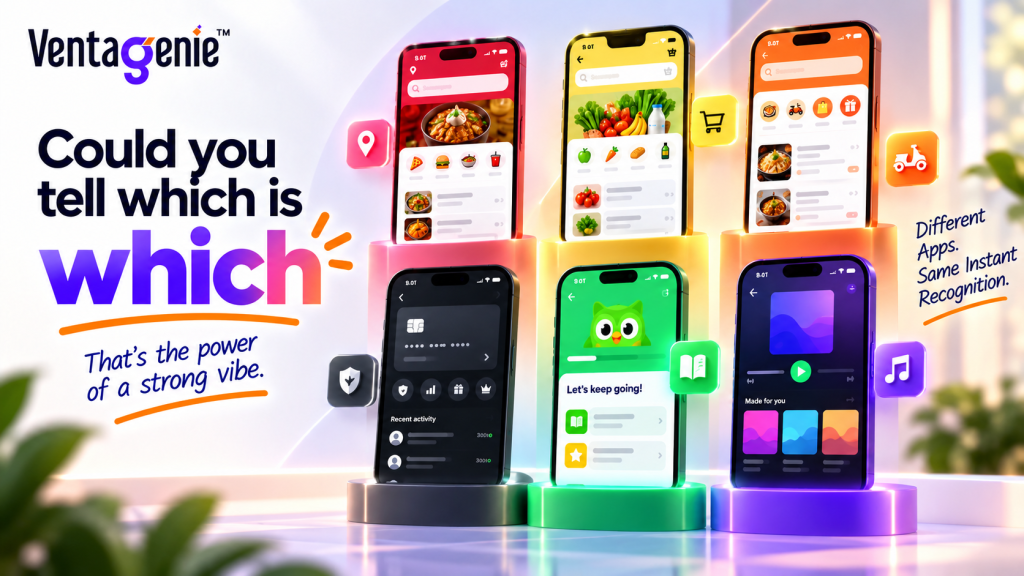
Real Brands Already Winning With This
You don’t need a marketing degree to see vibe commerce in action. It’s already sitting on your phone.
Zomato
Zomato doesn’t just sell food. Its push notifications are famous for sounding like a witty friend, not a company — poking fun at your midnight cravings or teasing you about an abandoned cart. It even built a sound into its brand: back in 2019, Zomato launched a “musical logo” (its MOGO, created with sonic-branding agency BrandMusiq) so the app is recognizable even with your eyes closed. That’s recognition taken seriously.
Blinkit
Blinkit picked one thing — insane speed — and built its entire personality around it. Every ad, every billboard, every bit of cheeky wordplay (including public banter with brands like Netflix and Zomato) reinforces the same idea: we’re fast, and we’re proud of it.
Swiggy
Swiggy goes emotional instead of funny. It positions itself as the answer to a moment — the late-night craving, the surprise guest, the lazy weekend. It’s not selling food. It’s selling relief.
Duolingo
Duolingo (not even a delivery brand, but the world’s favorite example) turned a boring reminder icon into a full-blown character with real personality — cheeky, a little unhinged, impossible to ignore. It worked because the team was given freedom to experiment fast and stay consistent.
CRED
CRED proves this works outside food and shopping too. Paying a credit card bill is one of the most boring tasks imaginable — CRED turned it into something that feels premium and even fun, using a distinct visual style (its “NeoPop” design language) and witty push notifications that make users feel part of an exclusive club. That’s a fintech app making bill payment feel like status.
Spotify
Spotify shows how far this can go once a year. Wrapped isn’t really a marketing campaign — it’s Spotify handing your own listening data back to you in a shareable, personality-driven format. It works because it makes users feel seen, and it turns an ordinary app into something people promote on their own social media, for free, every December.
Airbnb, Nike, and Notion
Airbnb, Nike, and Notion are worth a mention too — none of them compete on price. Airbnb sells belonging over booking, Nike sells identity over shoes, Notion built a cult-like community around what’s really just a document editor. In every case, the underlying product is replaceable. The feeling isn’t.
None of these brands — delivery, fintech, music, travel, or productivity — are winning because their product is technically “better.” They’re winning because they feel like something. Vibe commerce isn’t a delivery-app trick. It’s a principle any app-based business can use.
Why This Matters Even More for Delivery Apps
Delivery apps carry extra weight because people use them under pressure — hungry, busy, at work, managing something urgent. That means small problems feel bigger. A confusing order update creates stress. A delay with no explanation creates frustration. A well-written, human message creates trust.
This is why the brand experience doesn’t end when someone taps “Place Order.” It continues through confirmation, tracking, delays, support, refunds, and the next reorder. In delivery businesses, operations is customer experience — and customer experience is the brand.
The Real Blocker: Most Brand Ideas Die in the Backlog
Here’s the part that trips up most companies. A team might have a great idea — better delay messaging, a smoother reorder flow, a friendlier error screen. But if changing one notification requires a development request, engineering approval, testing, and a full release cycle, that idea sits in a slide deck for weeks while customers keep seeing the old, robotic version.
Vibe commerce isn’t only a marketing decision. It’s a technology decision. A flexible platform lets a team test and ship small experience changes fast. A rigid one makes every good idea slow. And most companies only write brand guidelines for logos, colours, and ads — never for the things customers actually read every day: notifications, error messages, refund emails, delay updates.
How to Actually Build This Into Your App
You don’t need a Duolingo-sized budget. You need consistency and the right technical setup.
1.Decide how you want customers to feel.
Fast? Reassured? Premium? Friendly? Pick a few words and use them to guide every product and communication decision.
2.Fix your "boring" screens first.
Order confirmations, delay alerts, refund messages — these get read more carefully than any ad. Give them personality.
3.Focus on high-emotion moments.
Delays, cancellations, and out-of-stock notices matter more than most screens because customer trust is won or lost right there.
4.Pick ONE feeling and own it.
Blinkit owns “fast.” Swiggy owns “relief.” Don’t try to be everything — pick your one thing and build every touchpoint around it.
5.Make sure your tech can keep up.
Your app needs to be built so copy, notifications, and small UI touches can ship fast — without a full backend rebuild every time.
6.Run the "logo-cover" test.
Screenshot your app screens, hide the logo, and ask a stranger to guess the brand. If they can’t, you know exactly what to fix.
7.Look past sales numbers.
Track repeat orders, reorder rate, cancellations, and support complaints — not just conversions. The real question isn’t “did they order once,” it’s “will they come back.”
Why Your App's Foundation Matters as Much as Your Ideas
Everything above sounds like a design or marketing job — until you try to actually ship it. Most delivery businesses don’t lack good ideas for a better customer experience. They lack an app built to support fast, frequent changes to copy, notifications, and UI without a full engineering cycle every time.
This is the real reason to think carefully before you build a delivery app from scratch, or before you pick a delivery app development company to work with. Some platforms are built rigid by default — every small brand tweak becomes a two-week project. Others are built with flexibility baked in from day one, so a delay-message rewrite or a new reorder flow can go live in hours, not sprints.
If you’re evaluating a delivery app development solution for a new business, or planning to create app experiences for an existing one, the right question isn’t just “can it handle orders and payments.” It’s “can our team actually act on customer-experience ideas once we have them.” That difference is often what separates a brand that builds real vibe commerce from one that just talks about it.
Why This Creates Real Buzz (Not Just Better Reviews)
When a brand nails its vibe, customers don’t just use it — they talk about it. They screenshot the funny notification. They tell friends “you have to see how this app talks to you.” That’s free marketing no ad budget can buy, and it’s exactly why brands like Zomato and Duolingo built massive followings without traditional advertising doing all the work.
For any delivery business, that’s the real opportunity in 2026: stop competing only on speed and price, and start competing on feeling. The brands that figure this out first — while competitors are still fine-tuning delivery times — are the ones people will be talking about next.
The Bottom Line
Speed and discounts get someone to download your app. They don’t explain why someone stays. What people remember is whether the app felt like something — and that feeling is built in dozens of small moments most businesses aren’t even thinking about yet. The businesses that start now, while “vibe commerce” is still a fresh idea, get to define what it means in their category before everyone else catches up.
Ventagenie builds custom delivery app solutions designed for flexibility at the UI, notification, and workflow layer — so brand ideas can actually ship, instead of getting stuck waiting on engineering.
Vibe commerce is still a new idea. The brands that build it into their app first will own it in their category.
Frequently Asked Questions
Vibe commerce is the practice of designing every customer touchpoint — app screens, notifications, packaging, support messages — so they consistently communicate a brand’s personality, not just complete a transaction. It extends branding beyond logos and ads into the actual product experience.
No. Vibe marketing mostly lives in ads, social content, and campaigns. Vibe commerce applies the same idea inside the product itself — order confirmations, delay alerts, checkout flow, and support interactions — which is where most customers actually spend their time with a brand.
Delivery apps often sell nearly identical products at similar prices and speeds, so brand feeling becomes one of the few real differentiators left. Customers also use delivery apps under time pressure, which makes small experience details — like how a delay is communicated — matter more than they would elsewhere.
Screenshot a few app screens, cover the logo, and ask someone unfamiliar with your brand to guess which company it belongs to. If they can identify it from the tone, colors, or copy alone, your brand has a recognizable vibe. If they can’t, the app is functional but not yet memorable.
Branding traditionally refers to visual identity — logos, colors, taglines, and ad campaigns. Vibe commerce is broader: it includes branding but also covers how the product itself feels to use, including notifications, error messages, and customer support tone.
No. The highest-impact starting point is usually free — auditing and rewriting existing “boring” screens like order confirmations, delay messages, and refund emails with a consistent tone. The bigger cost is usually technical: making sure the app can ship small experience changes quickly.
Yes. Fintech (CRED), music streaming (Spotify), language learning (Duolingo), and travel (Airbnb) have all used the same underlying principle — designing product experiences around a consistent feeling — to build stronger customer loyalty than price or features alone could create.
.
Treating it as a marketing-only project. A brand team can write great notification copy, but if the app’s technology requires a multi-week release cycle to change one message, the idea never reaches customers. Vibe commerce needs both creative direction and a flexible technical foundation to actually ship.

Mr. Aniket D is a seasoned digital marketer with over 10 years of experience in market research, content strategy, and performance marketing.
He specializes in analyzing consumer behavior, identifying emerging market trends, and translating insights into actionable digital strategies.
His work focuses on blending research-driven content with SEO and lead generation to drive measurable business growth.
Known for his data-first mindset, Aniket helps brands make smarter, audience-focused decisions in competitive markets.