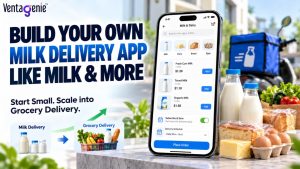
How to Build a Milk Delivery App Like Milk & More: Profit Potential, Features and Cost
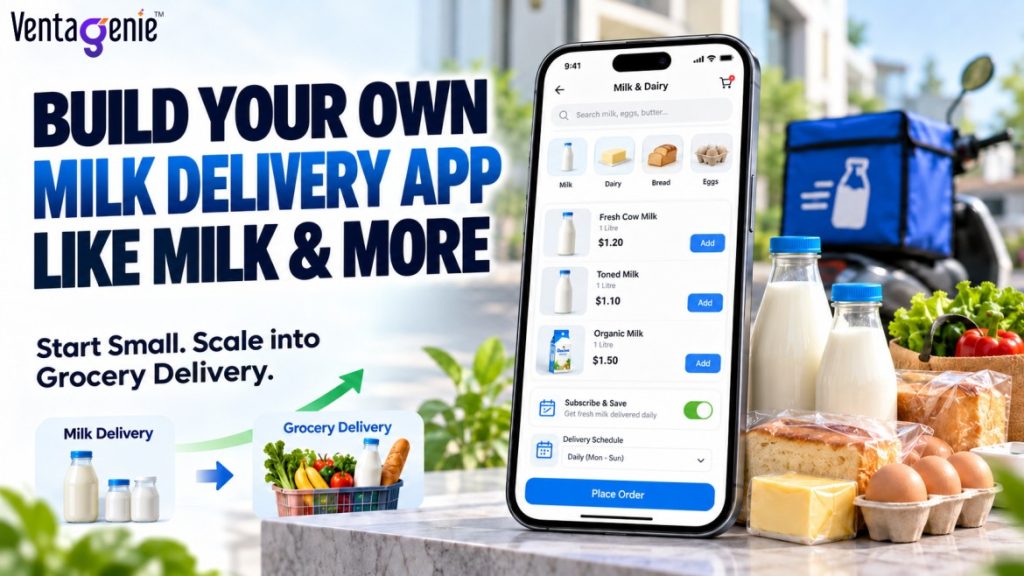
Imagine ordering fresh milk before going to bed and finding it at your doorstep the next morning. No supermarket trip, no last-minute shopping and no need to remember the same purchase every day.
That simple convenience is what makes doorstep milk delivery attractive to customers. For business owners, however, there is more to it than taking orders through an app.
You need to keep products fresh, prepare the right quantities, deliver orders on time and make sure every delivery makes financial sense. If your delivery routes are too long or customers place only small orders, your sales may look healthy while your profit remains low.
Milk & More offers an interesting example of how a traditional milk-round business can adapt to online ordering and changing customer habits.
If you are planning to build a similar service, the important questions are straightforward: How much could the business earn? What can you learn from Milk & More? Which features do you actually need? And how much should you budget for milk delivery app development?
Let’s look at the business side first.
How Much Profit Can a Milk Delivery Business Make?
Before investing in an app, it helps to understand the numbers behind the business. The app can make ordering and delivery easier, but your profit still depends on what you sell, what each order costs to fulfil and how often customers buy from you.
Let’s take a simple example.
A milk delivery business serving 1,000 households
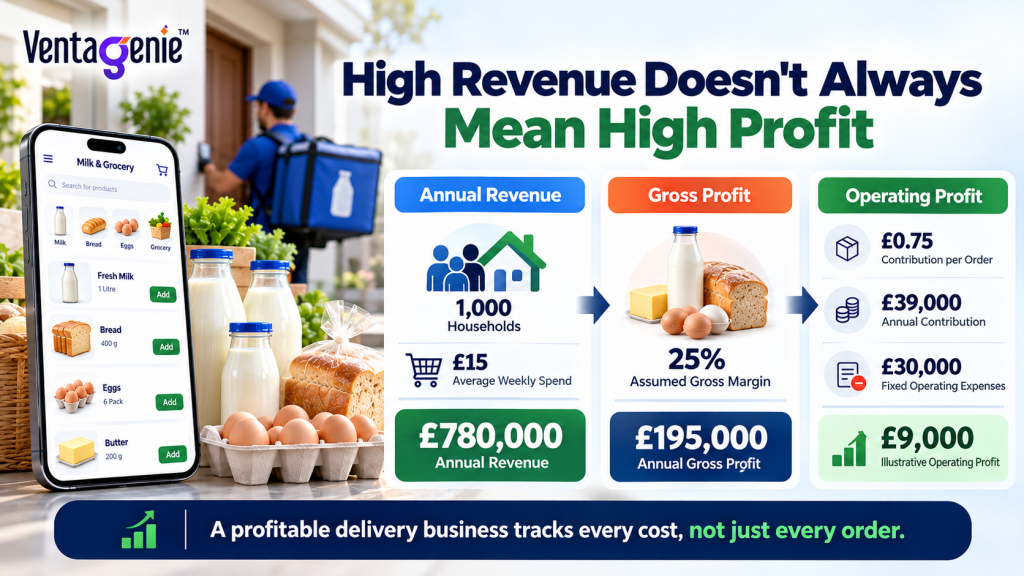
Suppose you have 1,000 active households, and each household spends an average of £15 per week on milk and related products.
Business metric | Illustrative figure |
Active households | 1,000 |
Average weekly spend per household | £15 |
Weekly revenue | £15,000 |
Annual revenue | £780,000 |
Assumed gross margin | 25% |
Annual gross profit | £195,000 |
The annual revenue calculation is simple: 1,000 households × £15 per week × 52 weeks = £780,000.
At a 25% gross margin, that leaves £195,000 in gross profit before delivery and other operating expenses.
But this is where the calculation becomes more important. Gross profit is not the money you take home. You still have to pay for delivery, packaging, payment processing, wastage, staff, technology and other business expenses.
What happens when delivery costs are included?
For this example, assume each household places one £15 order every week. That gives the business 52,000 orders over a year.
Now consider the following illustrative costs for each order:
Cost per order | Amount |
Product cost | £11.25 |
Delivery and fulfilment | £2.50 |
Packaging, payment fees and wastage allowance | £0.50 |
Contribution before fixed overheads | £0.75 |
The business keeps £0.75 from each order after these assumed variable costs. Across 52,000 orders, that amounts to £39,000 in annual contribution.
If fixed operating expenses are £30,000, the remaining illustrative operating profit would be £9,000 before interest, tax, depreciation and any other excluded expenses.
Notice the difference? The business generates £780,000 in annual sales, but the example leaves only £9,000 in operating profit after the costs included in the calculation.
These numbers are assumptions, not a prediction of what your business will earn. Actual results depend on supplier prices, product margins, delivery density, wages, customer retention and local operating costs.
What can improve your profit?
There are several ways to make the numbers work better.
- Increase the average order value.
Customers who order milk may also need bread, eggs, butter, curd or other everyday essentials. Additional products can make each delivery more valuable, provided their margins justify the extra costs.
2. Deliver more orders in the same area.
Serving more nearby households can reduce the time and distance spent on each delivery. Expanding too quickly across scattered locations can have the opposite effect.
3. Give customers a reason to keep ordering.
Recurring orders make demand easier to plan, but reliable service is what encourages customers to stay.
4. Reduce wastage and delivery mistakes.
Better order records and demand forecasts can help avoid excess stock, missing products and unnecessary repeat trips.
5. Track the profit from each order.
More orders are not always better if the business loses money fulfilling them.
An app can help you manage these areas, but it cannot fix poor margins on its own.
A question worth thinking about
If you were starting this business, would you focus first on getting more customers or making each existing order more profitable?
The answer depends on your numbers. If your delivery routes are already efficient but you have too few customers, growth may be the priority. If every order costs too much to fulfil, improving the economics of each delivery should come first.
What Is Milk & More, and Who Owns the Business?
Milk & More is a UK doorstep delivery service that brings milk and other everyday grocery products directly to customers. It combines the familiar milk round with online ordering, allowing customers to arrange regular deliveries and buy additional products.
The idea is straightforward: make routine shopping more convenient while coordinating the supply, preparation and delivery of products behind the scenes.
Who owns Milk & More?
Milk & More was previously part of Müller UK & Ireland. Freshways Group acquired the business in a transaction completed on 1 January 2024, according to Houlihan Lokey’s transaction announcement.
The operating company is MoreCo Group Limited, which trades as Milk & More. Its company registration and filing information can be checked through the UK government’s Companies House service.
The acquisition is worth understanding because it brought a doorstep delivery operation together with an established dairy supplier. That combination can create opportunities in sourcing, distribution and operating efficiency, although the actual benefits depend on how the business is run.
What is Milk & More's annual turnover?
According to The Grocer, Milk & More reported revenue of £121.97 million for the financial year ending 28 December 2024. Revenue fell by 13.8% compared with the previous year, while reported gross profit declined by 9.9% to £77.9 million.
The same report stated that the business recorded an EBITDA profit of £1.9 million in 2024, compared with an EBITDA loss of £18.4 million in 2023.
Financial metric | Reported 2024 figure |
Revenue | £121.97 million |
Gross profit | £77.9 million |
EBITDA | £1.9 million profit |
Year-on-year revenue change | −13.8% |
Year-on-year gross profit change | −9.9% |
Source: The Grocer, Milk & More on a sustainable growth path despite revenue fall.
One important point: EBITDA is not the same as net profit. It excludes interest, tax, depreciation and amortisation, so it should not be treated as the amount the business ultimately earns after every expense.
These are reported 2024 figures, not a claim about Milk & More’s latest financial performance. Check the subsequent company accounts before publishing any figures as current.
What can a new milk delivery business learn from this?
The biggest lesson is that turnover tells only part of the story.
Milk & More reported lower revenue in 2024 while its EBITDA improved substantially. This illustrates why a business needs to look beyond sales and pay attention to operating costs and profitability.
A new milk delivery business should not expect to achieve the same revenue or margins. Milk & More has an established brand, customer base, supply relationships and delivery infrastructure.
What you can learn from its model is the importance of connecting recurring customer demand with reliable fulfilment.
What would you do differently if you were launching a milk delivery service today?
Rather than trying to serve a large area from day one, you could begin with a smaller delivery zone, understand which products customers order regularly and expand once the operation becomes commercially sustainable.
Which Business Model Should You Choose?
Not every milk delivery business needs to work exactly like Milk & More. The right model depends on your customers, your suppliers and the way you plan to manage deliveries.
1. Subscription-based delivery
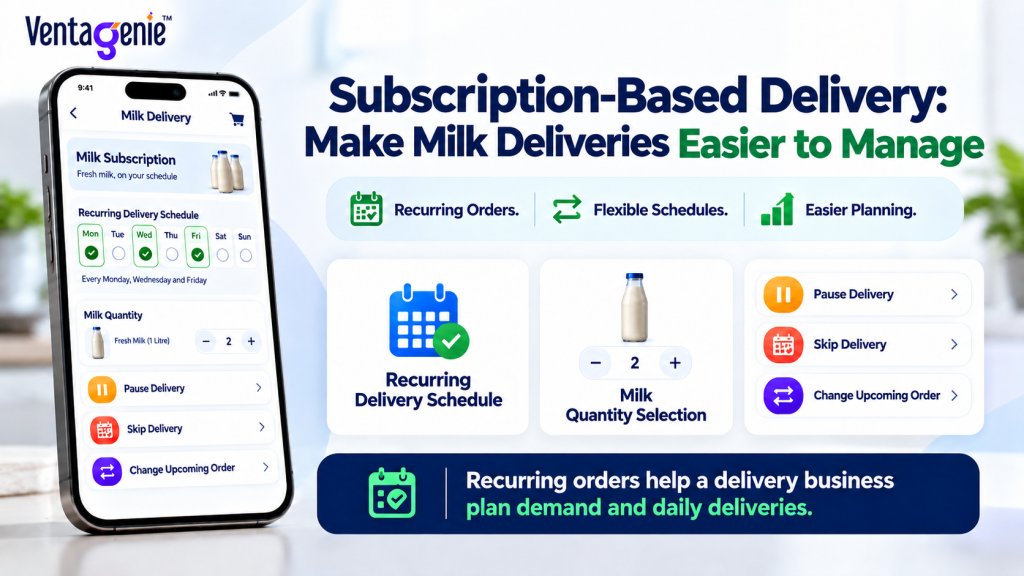
Customers choose a recurring schedule for their regular purchases. For example, a household might receive milk on selected mornings each week.
This can make demand easier to forecast because you have a better idea of what customers are likely to need. However, customers must be able to pause or change deliveries when their circumstances change.
2. On-demand ordering
Customers place an order whenever they need milk or other products. This gives them flexibility, but demand can be harder to predict and delivery routes may be less consistent.
This model may suit businesses where customers prefer occasional purchases rather than a fixed schedule.
3. A hybrid model
A hybrid approach combines regular milk deliveries with one-time purchases of other products.
A customer might receive milk every Monday, Wednesday and Friday, then add eggs or bread to one particular delivery.
For businesses targeting repeat household purchases, this model is worth considering because it combines recurring demand with flexibility. It still needs careful planning to ensure additional orders do not disrupt the delivery schedule.
4. A multi-vendor marketplace
A marketplace lets several dairies, local shops or suppliers sell through one platform.
It can help a business offer a wider product range without sourcing every item itself. However, it also introduces more complexity, including supplier management, stock availability, commissions, settlements and responsibility for fulfilment.
A single dairy may not need all that complexity at launch.
My recommendation: Choose the simplest model that meets your customers’ needs and supports your delivery economics. You can always expand the model when customer demand gives you a clear reason to do so.
How to Build a Milk Delivery App Like Milk & More
Building a milk delivery app starts with understanding how the business will operate every day. The customer app is only one part of the system. Orders, inventory, subscriptions, payments and delivery staff all need to work from consistent information.
Step 1: Understand your customers and delivery area
Start by identifying where you want to operate and who is most likely to order regularly.
Look at local competitors, delivery expectations, product prices, household density and supplier availability. Find out whether customers want scheduled milk delivery, occasional grocery orders or a combination of both.
The delivery area matters more than it might appear. Serving many households in a compact neighborhood can have very different economics from driving long distances between individual customers.
Step 2: Define the rules before development
Decide what customers can order, when they can change an order and how deliveries will be organized.
For example, if customers can pause their milk subscription, you need a clear cutoff time. Otherwise, the packing team may prepare products for a delivery the customer no longer wants.
The same applies to out-of-stock products, refunds, delivery failures and customer complaints. Defining these situations early helps avoid expensive changes later.
Step 3: Decide between custom development and a ready-made solution
Custom app development gives you more control over the product and its workflows, but it requires a clearly defined scope, development resources, testing and ongoing maintenance.
A configurable solution may be suitable if its existing capabilities match your requirements. Before choosing one, check its customization limits, integrations, data ownership, support terms and recurring fees.
The right choice is not automatically the cheapest option. It is the one that fits the business you are trying to build.
Step 4: Make ordering simple
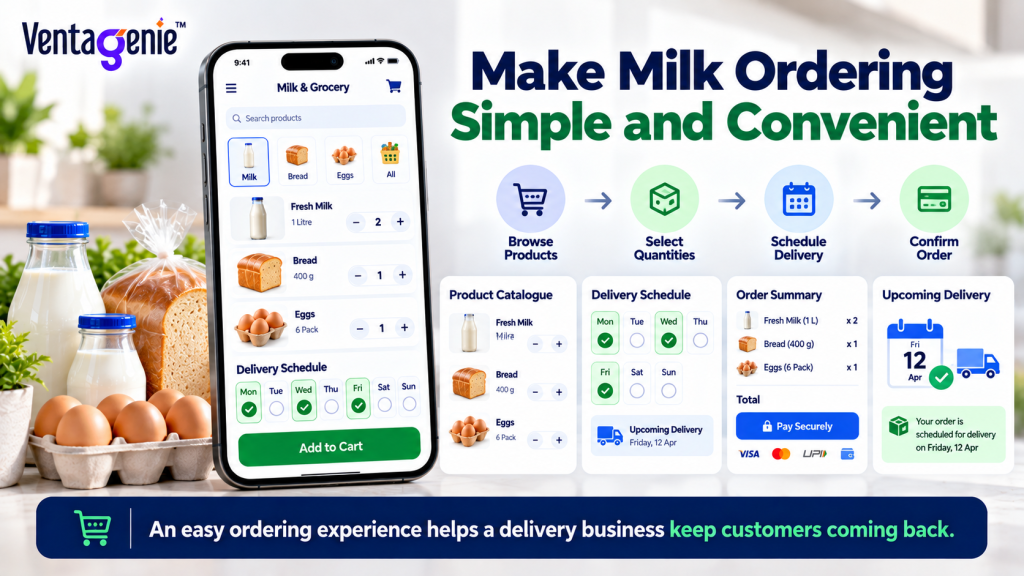
Customers should be able to check availability, browse products, select quantities, choose a delivery schedule and pay without confusion.
Returning customers should not have to repeat the entire ordering process every time. They should also be able to see when their next delivery is scheduled and understand which changes are still permitted.
Step 5: Connect the admin and delivery workflows
The admin panel should give staff an accurate view of upcoming orders, product quantities and customer changes.
Delivery personnel need their assigned stops, order details, customer instructions and a way to record successful or unsuccessful deliveries.
When a customer skips an order, that change should be reflected in the preparation list and delivery workflow. A connected system reduces the risk of staff relying on outdated spreadsheets or messages.
Step 6: Test before launching
Test the entire journey, not just the screens.
What happens if a payment fails? What if a product is unavailable? Can a customer change an upcoming subscription correctly? Can the delivery team record a missed delivery?
A controlled launch in one area will help you identify problems before they affect a larger customer base.
What Features Does a Milk Delivery App Need?
The features you need depend on your business model. A small local dairy may need a relatively simple system, while a larger delivery operation may require advanced scheduling, inventory integrations and multiple delivery teams.
Customer app
The customer-facing app should make it easy to:
- Browse products, prices and availability.
- Place one-time orders and schedule recurring deliveries.
- Pause, skip or change eligible upcoming orders.
- Save delivery addresses and instructions.
- Make payments and review order history.
- Receive useful order and delivery updates.
- Contact support about missing items or delivery problems.
Delivery staff app
Delivery personnel need practical tools for their daily rounds, including assigned delivery lists, product quantities, customer instructions, navigation support and delivery confirmation.
For businesses operating in areas with unreliable connectivity, selected delivery tasks may also need to work offline and synchronize later.
Admin dashboard
The admin dashboard should bring the main business operations together. It may include order and subscription management, inventory tracking, preparation lists, delivery assignments, payment records, refunds and business reports.
Reports are particularly useful when they answer operational questions rather than simply showing total sales. For example, managers should be able to understand which delivery areas are expensive to serve, which products sell regularly and how often orders are changed or missed.
One question to consider: What is more useful to a delivery business—a dashboard showing thousands of orders or one that explains which orders are profitable and where deliveries are going wrong?
The second is usually more actionable. Data becomes valuable when it helps you make a better decision.
How Can a Milk Delivery App Reduce Operating Costs?
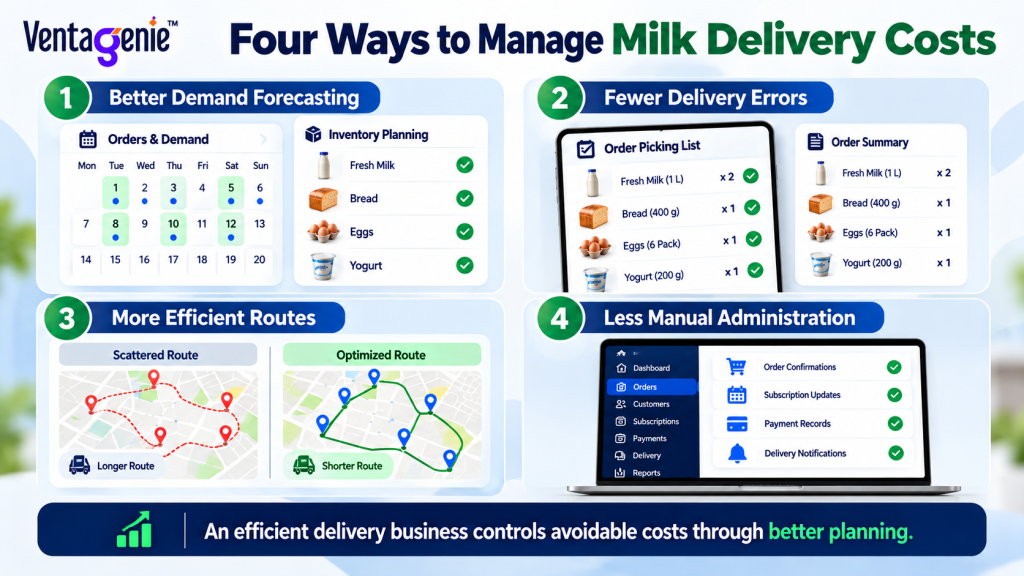
A milk delivery app creates value when it helps people do their jobs more accurately and gives the business better information.
- Better demand forecasting: Consolidating scheduled orders and customer changes can help staff prepare the right quantities and reduce unnecessary stock.
- Fewer delivery errors: Accurate order lists and customer instructions can reduce missing products, incorrect quantities and avoidable repeat trips.
- More efficient routes: Grouping nearby deliveries can reduce unnecessary travel. More advanced route optimization may be useful as the number of stops and delivery constraints increase.
- Less repetitive administration: Order confirmations, subscription updates, payment records and delivery notifications can reduce manual work when the underlying workflows are configured correctly.
However, software does not automatically reduce costs. The result depends on the quality of the data, staff adoption and the way the business manages its operations.
How Much Does Milk Delivery App Development Cost?
There is no single price for milk delivery app development. A basic ordering app is very different from a platform with recurring subscriptions, delivery staff tools, inventory management and advanced integrations.
Rather than relying on a headline price, define what the first version needs to do and ask providers to price that scope.
Your budget will depend on:
- The number of interfaces required, such as customer, delivery and admin apps.
- The complexity of recurring orders, pauses, skips and cutoffs.
- Payment, mapping, notification and inventory integrations.
- Custom workflows and reporting requirements.
- Hosting, support, security updates and ongoing maintenance.
Ask providers to separate initial development costs from recurring charges. Confirm what is included, which integrations carry additional fees and how future changes will be priced.
This gives you a more useful basis for comparing proposals than choosing the lowest quote alone.
How Can You Grow Revenue After Launch?
Once the basic delivery operation is working well, you can test ways to increase customer value.
1. Expand the product range thoughtfully.
Milk may be the reason customers join, but other frequently purchased products can create additional sales opportunities. Choose products based on demand, margins, storage requirements and delivery practicality.
2. Offer useful bundles.
A breakfast bundle or weekly essentials selection may make shopping easier. The bundle should still generate a sensible margin after discounts and handling costs.
3. Make repeat orders easy.
Customers are more likely to keep using a service when deliveries are reliable and changes are simple. Subscription flexibility should support retention rather than make the process confusing.
4. Test referral and loyalty programs.
These can encourage repeat purchases, but measure whether they generate enough additional business to justify the cost.
5. Consider business customers.
Depending on your market, offices, cafés and restaurants may offer opportunities for regular supply. Their order sizes, payment terms and delivery expectations may differ from those of households.
Before expanding, work out what each new revenue stream contributes after its associated costs.
Common Mistakes to Avoid
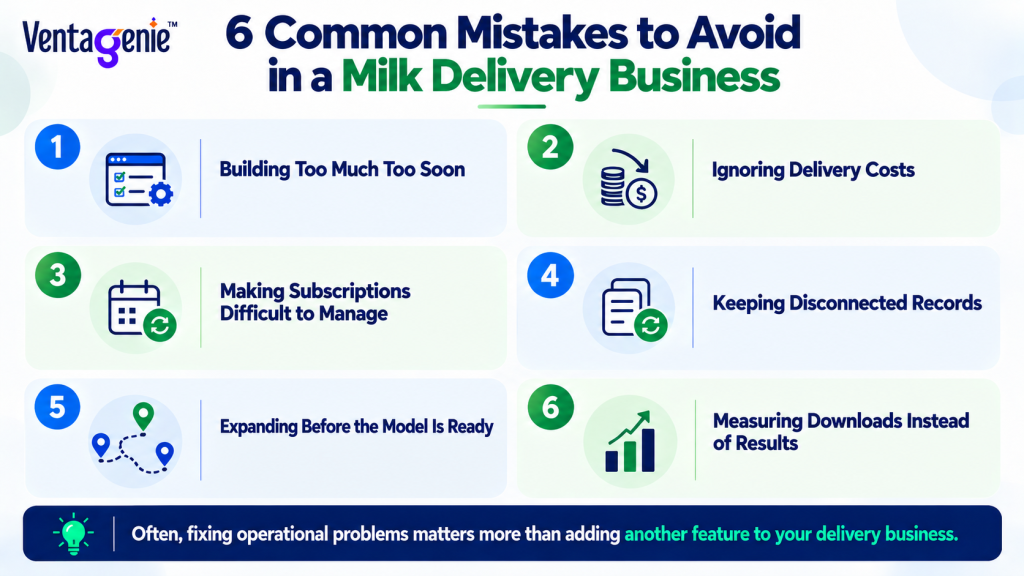
A few mistakes can make an otherwise promising milk delivery business unnecessarily expensive to operate.
- Building too much too soon: Start with the essential ordering and delivery workflows, then add features when there is a clear business need.
- Ignoring delivery costs: A large customer base does not guarantee profit if routes are inefficient or order values are too low.
- Making subscriptions difficult to manage: Customers need clear rules for changing, pausing and cancelling upcoming deliveries.
- Keeping disconnected records: Customer orders, preparation lists and delivery status should stay consistent across the system.
- Expanding before the model is ready: Validate the service in a focused area before taking on more delivery locations.
- Measuring downloads instead of results: Repeat purchases, contribution per order, delivery accuracy and retention tell you more about business performance than app downloads alone.
Often, fixing these operational issues is more valuable than adding another feature.
How VentaGenie Can Help You Build a Milk Delivery App
Every milk delivery business has different requirements. A local dairy may need a straightforward customer app and order management system, while a larger operation may require subscription automation, delivery staff tools, inventory integrations and support for multiple locations.
VentaGenie provides mobile app development services for businesses planning customer-facing digital products. The scope of a milk delivery project can be shaped around the business model, target market, operational workflows and plans for future expansion.
Before development begins, decide which features are essential for launch and which can wait. This helps keep the initial scope focused while leaving room for future improvements.
Planning a milk delivery app for your business? Contact VentaGenie to discuss your requirements and explore an appropriate mobile app development approach.
Final Thoughts: Build a Delivery Business That Works
Milk & More is a useful case study because it shows how a traditional doorstep delivery service can adapt to online ordering. Its reported financial results also highlight why revenue should never be confused with profitability.
For a new business, the first priority is not to build the biggest app or offer the longest product list. It is to understand customer demand, make each delivery commercially viable and give customers a service they can rely on.
Start with a focused delivery area, track the numbers that matter and improve the operation before expanding. A well-planned milk delivery app can support that process by connecting customer orders, inventory, payments and delivery teams in one system.
Frequently Asked Questions
Building a milk delivery app doesn’t have to require a large upfront investment. The cost depends on the features you need, the delivery model you choose, and whether you want to manage a single store or multiple vendors.
As an initial planning estimate, a basic milk delivery app can start at around $2,000–$5,000. A more advanced platform with grocery ordering, subscription management, delivery tracking, and multiple user panels will require a larger budget.
There is no fixed profit figure for a milk delivery business. Earnings depend on the number of active customers, average order value, product margins, delivery costs, wastage, staff expenses and customer retention.
For example, a business serving 1,000 households that each spend £15 per week would generate £780,000 in annual sales, assuming all 1,000 households order every week for 52 weeks. However, sales are not the same as profit. Product costs, delivery and operating expenses must be deducted before calculating what the business actually earns.
The best starting point is to calculate the contribution from each order and estimate how many orders are needed to cover your fixed costs.
It can be profitable when customer demand, product margins and delivery operations work together. Regular milk orders can make demand more predictable, while additional products may increase the value of each delivery.
The main challenge is fulfilment cost. Delivering small orders across a large area can reduce margins, even when sales are growing. Start with a manageable delivery area, monitor profit per order and expand when the numbers support it.
A milk delivery app typically focuses on dairy products and recurring doorstep deliveries. A grocery delivery app usually supports a wider product catalogue, potentially including fresh produce, packaged foods, household essentials and personal care products.
The two models can overlap. A milk delivery business can introduce additional grocery categories through the same app, provided its inventory, storage, order preparation and delivery operations can support them.
If you want to serve customers beyond milk and dairy, planning for a flexible product catalogue from the beginning can make future expansion easier.
A milk delivery app generally needs a product catalogue, customer registration, order placement, payment processing, delivery scheduling, order notifications and an admin dashboard.
For subscription-based services, customers should also be able to manage recurring orders, change quantities, skip deliveries or pause their subscriptions according to clear business rules.
Delivery staff may need assigned delivery lists, customer instructions and delivery confirmation. More advanced capabilities, such as automated route optimization and demand forecasting, can be introduced when the size of the operation justifies them.
Yes. A hybrid model lets customers receive milk on a regular schedule while ordering additional products whenever they need them.
For example, a customer could receive milk every Monday, Wednesday and Friday and add eggs, bread or juice to a particular delivery. This provides flexibility and creates opportunities to increase average order value.
The system needs to handle subscription changes, order cutoffs, product availability and delivery schedules correctly so that additional orders do not disrupt regular deliveries.
The timeline depends on the number of applications, the complexity of recurring orders, required integrations and the amount of customization involved.
A focused first version with essential ordering and admin functions will generally take less time than a platform with multiple delivery teams, advanced inventory management and complex route planning. Your development partner should provide a realistic timeline after reviewing the requirements.
Yes. Depending on your location and service requirements, you may be able to use third-party delivery partners and pay for deliveries as needed rather than employing a full delivery team from the beginning.
This can reduce fixed staffing commitments while you test demand. However, compare per-delivery charges, service availability, delivery reliability and customer experience before choosing this approach.
As order volume grows, compare the total cost of outsourced delivery with the cost of managing your own delivery operation.
Yes, provided the platform can support additional product categories and your operations are ready to fulfil them.
You could begin with milk and essential dairy products, then introduce items such as bread, eggs, butter, yoghurt and other frequently purchased groceries. Before expanding, evaluate customer demand, product margins, storage requirements and the extra handling involved.
A phased approach lets you test which products customers actually want before investing heavily in a wider catalogue.
Development is only the initial investment. Depending on your setup, ongoing expenses may include hosting, maintenance, payment processing, maps and notification services, app-store accounts, customer support and marketing.
You must also account for the operating costs of the delivery business itself, including product procurement, packaging, staff, delivery charges and wastage.
Ask your development partner to distinguish technical running costs from day-to-day business expenses so you can prepare a realistic operating budget.
A ready-made or configurable solution may suit a business that wants to launch quickly and whose requirements match the platform’s existing features.
Custom development may be more appropriate when you need specialized subscription rules, unique delivery workflows, complex integrations or greater control over the product’s future direction.
Compare the total cost, flexibility, ownership terms, support and scalability of each option before deciding. The right approach is the one that meets your actual business requirements—not necessarily the one with the longest feature list.
Start by defining your target customers, delivery area, product range and business model. Decide whether you will offer subscriptions, one-time orders or both, then identify the features needed to manage customer orders and daily deliveries.
Next, prepare a development scope and budget that includes both initial and ongoing costs. A clear scope helps your development partner recommend a practical first version and identify which capabilities can be added as the business grows.

Mr. Aniket D is a seasoned digital marketer with over 10 years of experience in market research, content strategy, and performance marketing.
He specializes in analyzing consumer behavior, identifying emerging market trends, and translating insights into actionable digital strategies.
His work focuses on blending research-driven content with SEO and lead generation to drive measurable business growth.
Known for his data-first mindset, Aniket helps brands make smarter, audience-focused decisions in competitive markets.