How to Build a Courier Delivery App Like Porter: A Deep Strategic Guide to Winning the On-Demand Logistics Market
The Moment Logistics Broke (And Nobody Noticed)
A restaurant owner in Mumbai once said:
“Cooking food is easy. Delivering it across the city is the real problem.”
That one statement explains why companies like Porter became billion-dollar logistics disruptors.
For years, intra-city logistics was broken.
If a business needed to move goods across the city, the process looked like this:
- Call multiple local transporters
- Negotiate prices manually
- Wait for uncertain pickup times
- Have zero visibility after dispatch
- Deal with delayed deliveries and angry customers
The biggest issue wasn’t transportation.
It was uncertainty.
And uncertainty kills businesses.
Retailers lost repeat customers.
Restaurants lost revenue.
Small manufacturers lost operational efficiency.
Then Porter entered the market and turned logistics into an on-demand experience—similar to booking a cab.
With instant bookings, transparent pricing, live tracking, and faster deliveries, Porter transformed how businesses and consumers move goods.
The Real Innovation Behind Porter (It Wasn’t the App)
Most people think Porter became successful because it built a mobile app.
That’s not true.
Porter built a logistics infrastructure layer powered by technology.
It solved three major market inefficiencies:
Fragmented Demand:
Millions of small businesses needed delivery services but had no centralized solution.
Idle Supply:
Thousands of vehicle owners had underutilized trucks, bikes, and mini-commercial vehicles.
Lack of Visibility:
Customers had no idea where their goods were after dispatch.
Porter connected all three problems into one seamless ecosystem.
That’s why it scaled rapidly.
- Did You Know?
- India’s logistics market is projected to reach $357.3 billion by 2030, growing rapidly due to eCommerce expansion, digital adoption, and rising last-mile delivery demand. This massive growth is creating huge opportunities for startups building platforms like Porter.
Source: Grand View Research - Same-day deliveries already account for 53.4% of India’s intra-city logistics market, and Tier 2 & Tier 3 cities are now among the fastest-growing delivery markets—showing that logistics demand is expanding far beyond major metro cities.
Source: Mordor Intelligence
Porter Business Model:
How Porter Actually Makes Money?
This is where most blogs stay shallow.
Let’s go deeper.
Porter operates on an asset-light logistics marketplace model, which means it does not own most of the vehicles.
Instead, it connects customers with driver partners.
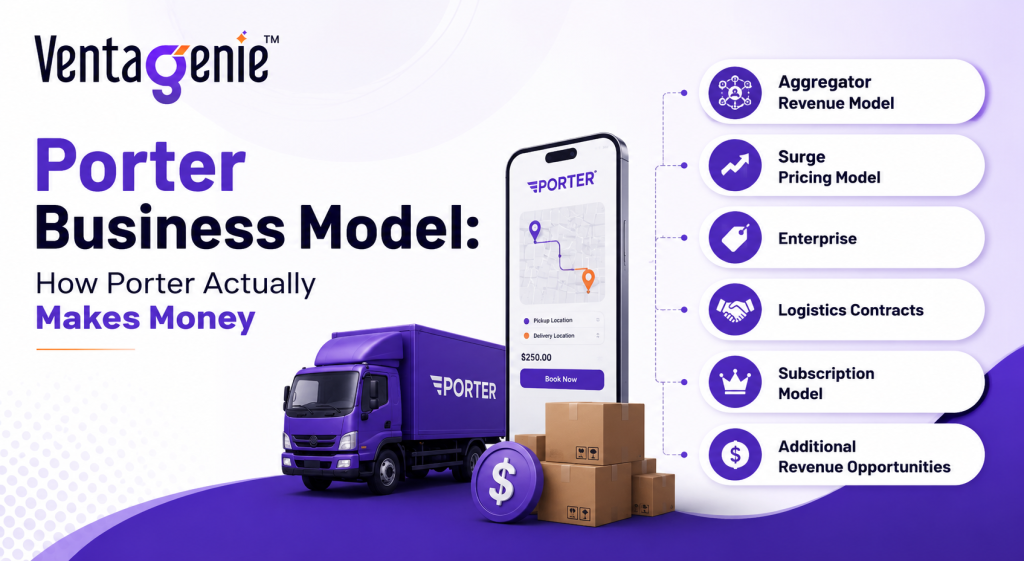
1. Aggregator Revenue Model
This is Porter’s primary revenue engine.
When a customer books a delivery:
- Customer pays transportation fee
- Porter keeps platform commission
- Remaining amount goes to driver partner
This model scales fast because Porter doesn’t need massive capital investment in vehicles.
2. Surge Pricing Model
During peak hours:
- Rainy days
- Festivals
- Rush business hours
- High demand periods
Porter increases pricing dynamically.
This improves driver supply while increasing margins.
3. Enterprise Logistics Contracts
Porter also works with:
- E-commerce brands
- Retail businesses
- Manufacturers
- Large enterprises
These partnerships generate recurring high-volume revenue.
4. Subscription Model
Many logistics startups are now introducing subscription plans for businesses that require daily deliveries.
This creates predictable recurring income.
5. Additional Revenue Opportunities
Future logistics startups can monetize through:
- Insurance partnerships
- Warehouse integrations
- API logistics services
- Fleet financing partnerships
Why This Market Is Still Wide Open? (Despite Big Players)
At first glance, it feels like Porter has already won.
But look deeper.
What Porter Has NOT Fully Solved:
- Deep penetration in Tier 2 and Tier 3 cities
- Industry-specific logistics (e.g., construction, pharmacy, furniture)
- Hyperlocal specialization
- Consistent driver experience across regions
At first glance, it feels like Porter has already won.
But look deeper.
🔍 Insight:
Logistics is not a winner-takes-all market.
It is:
- Regional
- Fragmented
- Behavior-driven
👉 Which means: there is still room to build—and win.
Deep Features Required to Build an App Like Porter
Most blogs simply list random features.
Let’s break this down strategically.
A Porter-like business needs following Features three operational ecosystems.
1.Customer App Features
This is where customer trust is built.
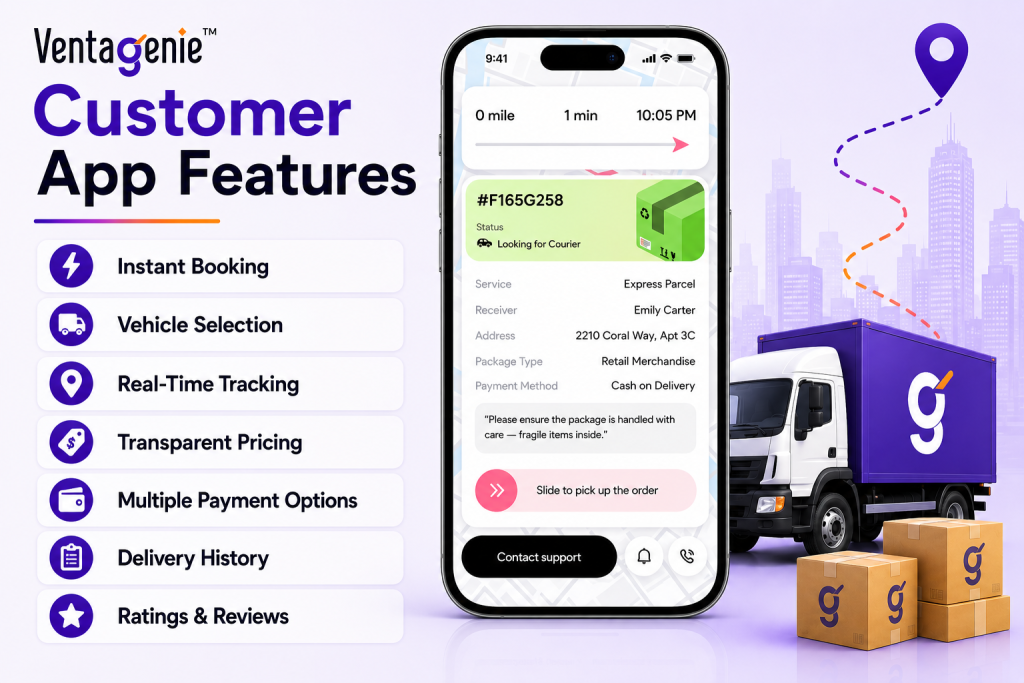
1. Instant Booking
Customers should book vehicles within seconds.
The fewer clicks required, the higher your conversion rates.
2. Vehicle Selection
Users should choose between:
- Bike delivery
- Mini truck
- Pickup truck
- Large commercial vehicle
This flexibility expands market demand.
3. Real-Time Tracking
One of Porter’s biggest trust drivers.
Customers want live visibility.
Without tracking, repeat orders drop significantly.
4. Transparent Pricing
Customers hate hidden charges.
Fare estimates should be visible upfront.
5. Multiple Payment Options
Include:
- UPI
- Wallets
- Cards
- COD
6. Delivery History
Businesses often need repeat deliveries.
Stored delivery history improves retention.
7. Ratings & Reviews
This improves quality control.
2. Driver App Features
Drivers are your operational backbone.
Most startups ignore this.
That’s why they fail.
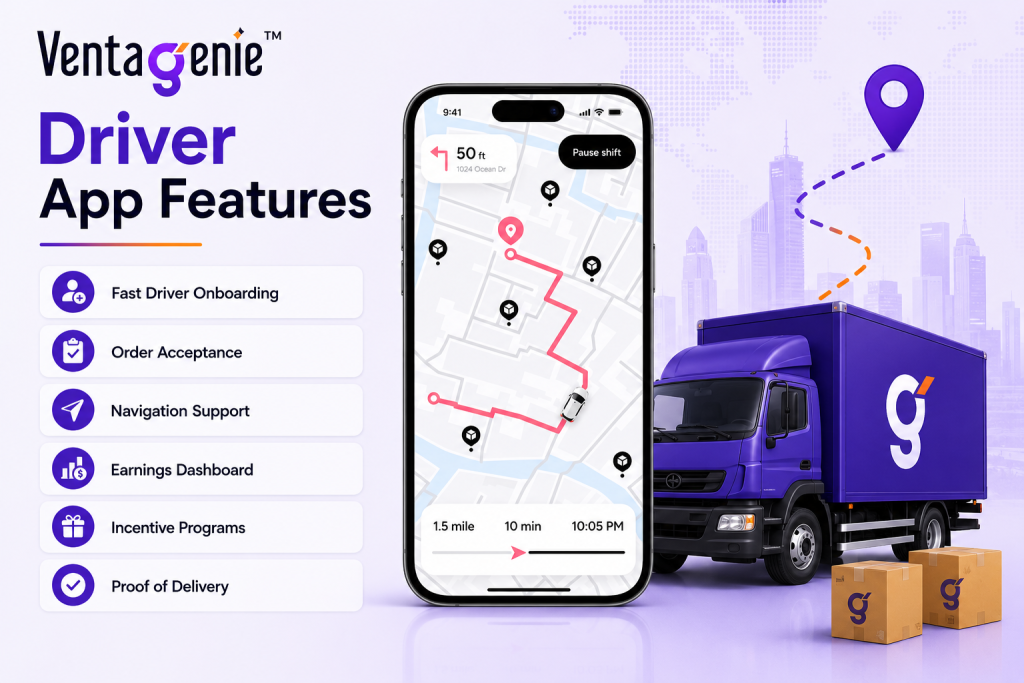
1. Fast Driver Onboarding
Easy KYC/document verification.
2.Order Acceptance
Drivers need trip visibility before accepting.
3. Navigation Support
Helps reduce delays.
4. Earnings Dashboard
Drivers stay longer when earnings are transparent.
5. Incentive Programs
Gamification improves retention.
6. Proof of Delivery
Signature/photo verification reduces fraud.
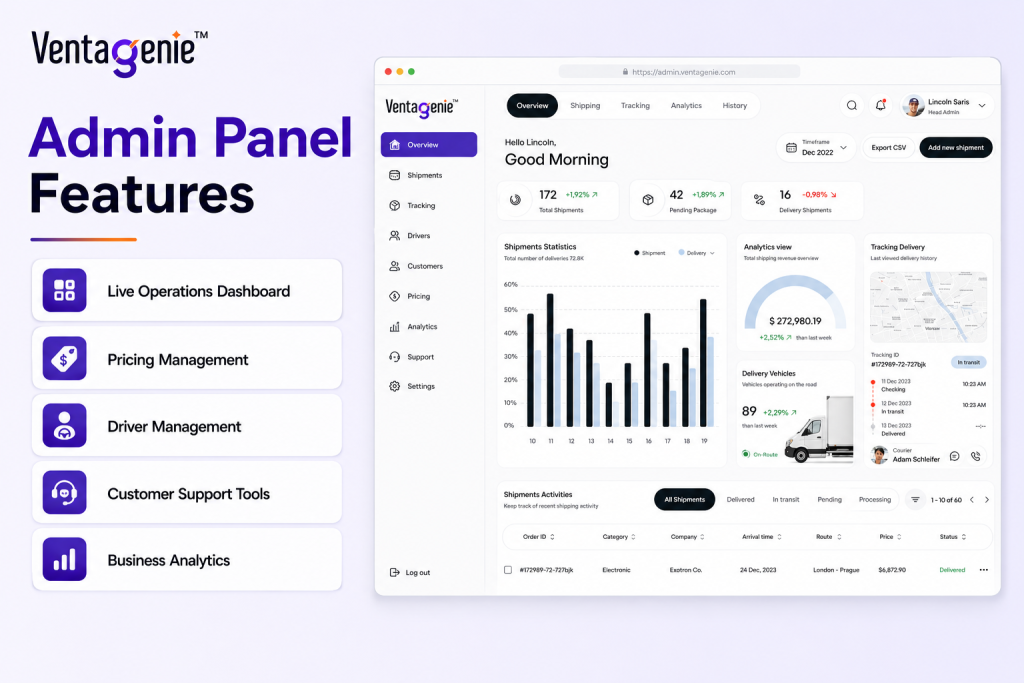
3. Admin Panel Features (Control Engine)
This is where scaling happens.
1. Live Operations Dashboard
Monitor deliveries in real-time.
2. Pricing Management
Control commissions and surge pricing.
3. Driver Management
Track performance and onboarding.
4. Customer Support Tools
Handle disputes quickly.
5. Business Analytics
Track:
- Revenue
- Delivery success rates
- Driver retention
- Customer retention
Why Most Porter Clones Fail?
This is where founders lose money.
They focus only on building an app.
They ignore:
- Driver acquisition
- Retention strategy
- Unit economics
- Operational execution
- Market niche selection
Logistics businesses fail because operations break before technology does.
Where the Biggest Opportunity Exists Today?
Instead of competing directly with Porter, smart founders are targeting:
- Tier 2 cities
- B2B logistics
- Healthcare deliveries
- EV logistics
- Cold chain logistics
- Hyperlocal grocery logistics
This is where massive growth still exists.
The Three Invisible Engines Behind a Successful Logistics App
Forget features for a moment.
Every successful logistics platform runs on three deeper systems:
- Trust Engine
This is what makes users come back.
- Trust
Trust is built when:
- Pricing is predictable
- Delivery timelines are reliable
- Communication is clear
- Truth:
Users don’t care about your app.
They care about certainty.
2. Supply Engine (Drivers)
Drivers are not just “users”—they are your infrastructure.
If they are:
- Underpaid → they leave
- Confused → they make mistakes
- Unmotivated → service quality drops
Reality:
Most logistics startups fail because they underestimate driver psychology.
3. Matching Engine
This is the brain of your system.
It decides:
- Which driver gets which order
- How fast delivery happens
- Whether your economics work
🔍 Insight:
Even small inefficiencies here can destroy margins at scale.
- Did You Know?
A delay of even 5–10 minutes per delivery, when scaled across thousands of orders, can significantly impact profitability.
What Your App Really Needs? (Beyond “Features”)
Let’s go deeper than generic feature lists.
Your Customer Experience Must Solve 3 Emotions:
- Uncertainty → Confidence
- Delay Anxiety → Real-Time Visibility
- Price Doubt → Transparency
If your app doesn’t solve these, it won’t scale—no matter how many features you add.
Your Driver Experience Must Solve 3 Problems:
- “Will I earn enough?”
- “Is this worth my time?”
- “Can I trust this platform?”
If the answer is “no,” your supply disappears.
The Real Business Model (Explained Without Buzzwords)
At its core, a Porter-like business is simple:
- You don’t move goods
- You don’t own infrastructure
- You don’t control demand
👉 You coordinate everything better than anyone else
Where Money Is Actually Made:
- Efficient matching
- Smart pricing
- High utilization
- Repeat usage
Critical Insight:
Profit doesn’t come from more deliveries.
It comes from better efficiency per delivery.
Why Timing Matters More Than Ever?
Right now, three forces are colliding:
- Digital adoption by small businesses
- Rising demand for instant delivery
- Gig economy expansion
This creates a rare window where:
👉 Demand is growing faster than supply systems
👉 Users are open to trying new platforms
👉 Markets are still being shaped
The Smarter Way to Enter This Market
Let’s be practical.
You have two choices:
Option 1: Build Everything From Scratch
- High cost
- Long development time
- Delayed market entry
👉 Risk: You launch too late.
Option 2: Launch Fast, Optimize Later
- Enter market early
- Test real demand
- Improve based on actual usage
👉 Advantage: You learn faster than competitors.
Where Most Competitor Blogs Mislead You
They focus on:
- Features
- Development steps
- Tools
But they ignore:
- Market timing
- Execution strategy
- Operational reality
👉 That’s why many founders build apps…
but never build businesses.
Why Ventagenie Courier Delivery App Development Solution Is Built for This Opportunity
If your goal is not just to build—but to win, your approach matters.
Ventagenie Courier Delivery App Development solution focuses on what actually drives success:
- Faster go-to-market
- Scalable logistics systems
- Real-world operational understanding
- Business-first development approach
Instead of spending months figuring things out,
you can focus on:
- Market capture
- Driver network growth
- Customer acquisition
Final Thought: This Is Not a Tech Game—It’s an Execution Game
Porter didn’t succeed because it had better code.
It succeeded because:
- It understood the problem deeply
- It executed consistently
- It scaled intelligently
And here’s the real opportunity:
You don’t need to beat Porter everywhere.
You just need to:
👉 Be better in one city
👉 One niche
👉 One use case
Ready to Launch Your Delivery App?
Porter started by solving one broken logistics problem.
That single idea turned into a massive business.
The next logistics giant may not be built in Mumbai, Bangalore, or Delhi.
It could be built in your city.
In your niche.
Around your idea.
The real question is:
Will you build it before someone else does?
Ventagenie helps founders launch scalable courier delivery apps faster—so you can focus on growth, partnerships, and market expansion.
Frequently Asked Questions
The cost of building a courier delivery app like Porter depends on your business model, features, and launch scale.
Factors affecting cost include real-time tracking, payment integration, admin dashboards, multi-vehicle support, and scalability requirements.
Development timelines vary depending on complexity.
Businesses can reduce launch time significantly by using white-label logistics solutions.
Porter primarily uses an asset-light aggregator model where it connects customers with independent driver partners.
Its revenue comes from:
- Commission per delivery
- Surge pricing
- Enterprise contracts
- Subscription services
- Additional logistics partnerships
A Porter-like app typically needs:
Customer Features
- Instant booking
- Live tracking
- Multiple vehicle options
- Secure payments
- Delivery history
Driver Features
- Order management
- Earnings dashboard
- Navigation tools
- Proof of delivery
Admin Features
- Analytics dashboard
- Pricing controls
- Driver management
- Customer support tools
Yes—if executed correctly.
Profitability depends on:
- High driver utilization
- Efficient delivery matching
- Repeat customer usage
- Strong unit economics
- Low customer acquisition costs
Many startups fail because they scale before fixing operational inefficiencies.
Yes.
Many startups successfully compete by focusing on niche markets such as:
- Healthcare logistics
- Grocery delivery
- Furniture transportation
- EV logistics
- Tier 2 and Tier 3 city delivery services
You don’t need to beat Porter everywhere—you need to dominate a specific niche.
The most common business models include:
Aggregator Model → Low investment, highly scalable
Fleet Ownership Model → High control but expensive
Hybrid Model → Balanced approach for scalingMost startups begin with the aggregator model because it requires lower upfront capital.
Courier apps generate revenue through:
- Delivery commissions
- Subscription plans
- Surge pricing
- Enterprise contracts
- API logistics services
- Warehousing partnerships
Growing industries include:
- E-commerce
- Healthcare
- Food delivery
- Retail
- Construction
- Grocery delivery
- Pharmaceutical logistics
These industries create strong demand for courier app solutions.
Custom apps provide full flexibility but require higher investment and longer development timelines.
White-label solutions help businesses:
- Launch faster
- Reduce upfront costs
- Validate demand quickly
The right choice depends on your budget, timeline, and long-term goals.